The Problem Most Coaches Misdiagnose
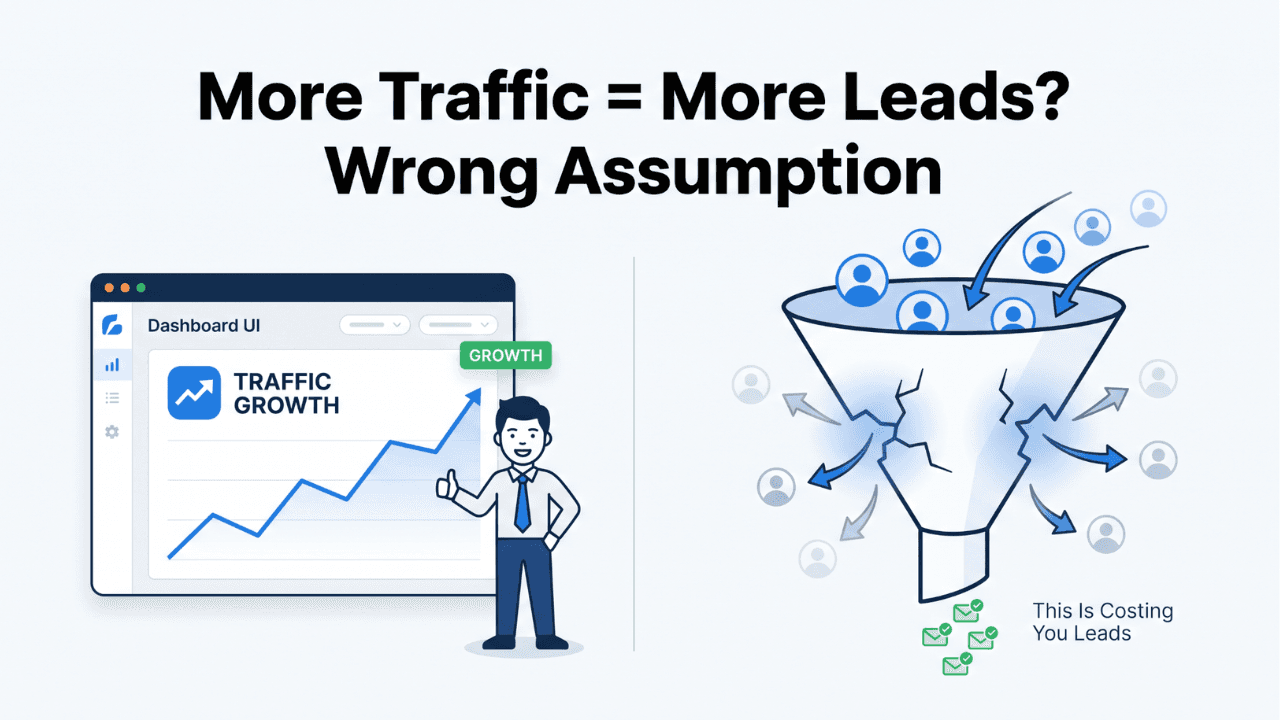
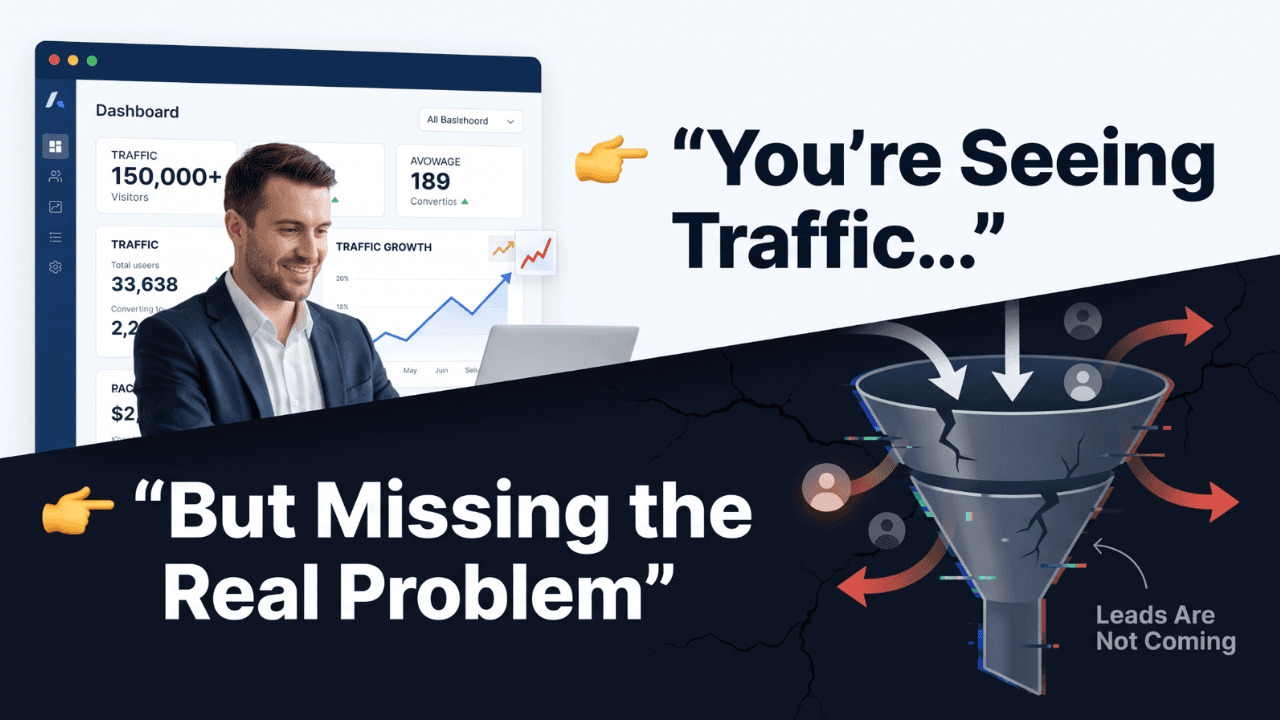
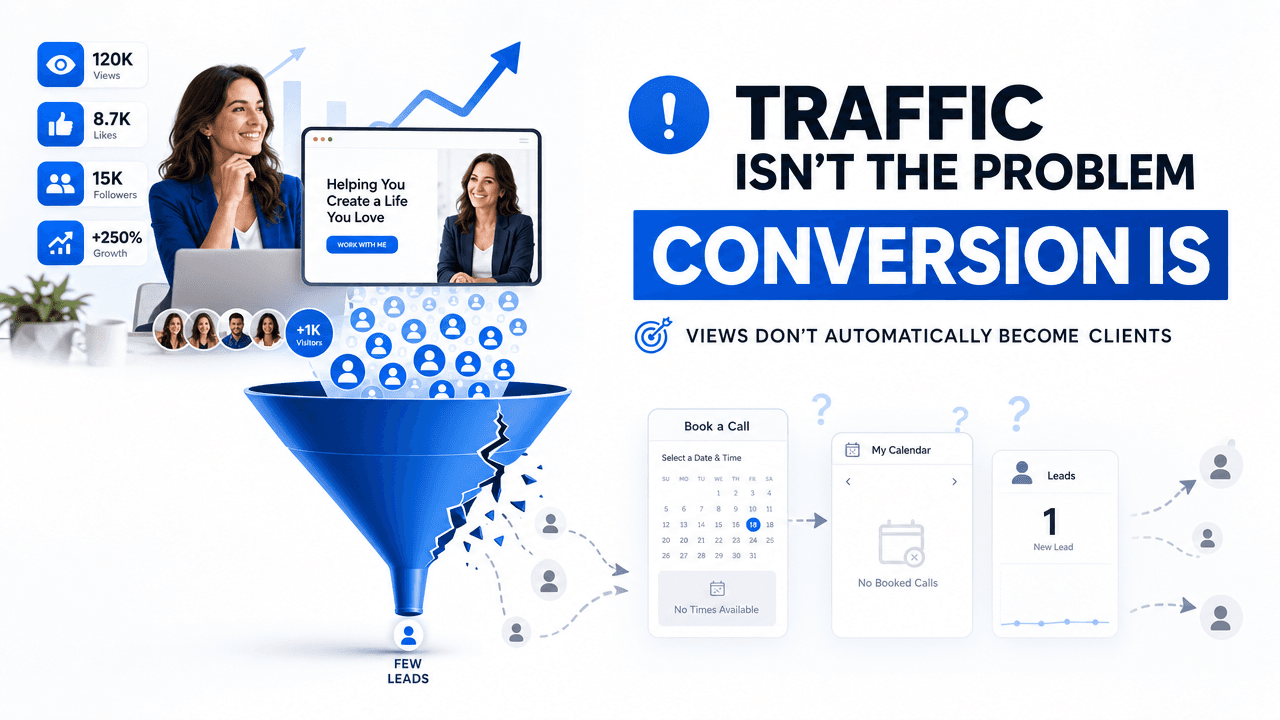
Most coaches believe they need more traffic—more followers, more reach, more visibility. But the reality is different. People are already visiting your website or profile… they just don’t convert into clients. This is not a traffic problem. It is a conversion problem. And until this is fixed, more traffic will only increase drop-offs instead of revenue
What Actually Happens When Visitors Don’t Convert
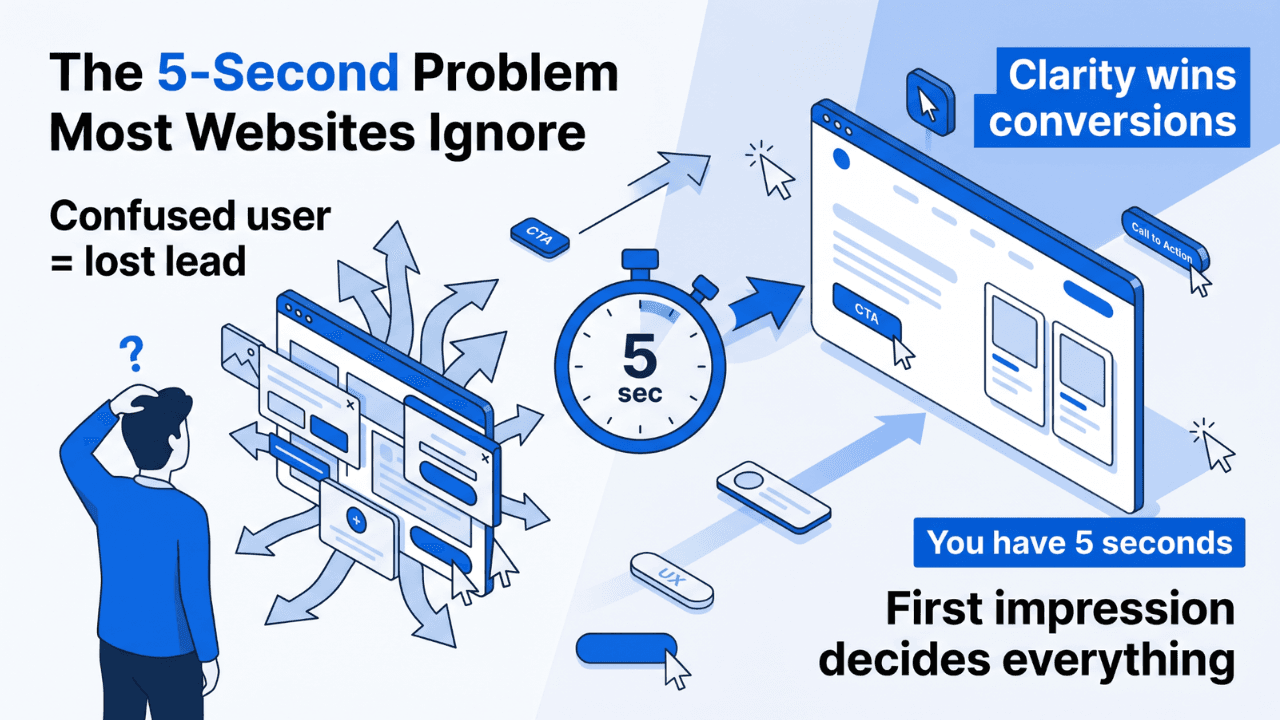
A potential client lands on your website, scans quickly, and leaves. Not because they are not interested—but because they are not convinced. Attention exists. Decision does not. That gap is where most opportunities are lost. Attention without direction creates drop-offs
Conversion Is a Decision System
People do not become clients because they visited your website. They become clients because they made a decision. If your website does not guide that decision clearly, conversion will always remain low. Conversion depends on how clearly decisions are guided.
Why Coaching Websites Struggle More Than Product Websites
Products are tangible—people understand what they get. Coaching is intangible. People cannot see the outcome immediately. This increases hesitation. That is why clarity, trust, and confidence matter more for coaches than for most businesses
The Expansion Insight Most Blogs Miss
Most coaching websites are designed to explain services. High-converting websites are designed to guide decisions. This difference is subtle—but it changes everything. Explanation informs. Decision design converts
The Real Reasons Visitors Don’t Become Clients
Across coaching businesses, three consistent issues reduce conversion
Lack of Decision Clarity Visitors don’t understand what you do, who it is for, and what result they will get
Friction in the Journey Booking calls or taking next steps feels complicated or unclear
Low Trust Signals There is not enough proof to reduce hesitation and build confidence
Let’s bring your ideas to life. Contact us today for a free consultation or book a demo with our team.
Fix A: Improve Decision Clarity
Visitors decide within seconds whether your offer is relevant. Your website must clearly communicate: what you do, who it is for, and what outcome you deliver. People don’t buy coaching. They buy certainty. When clarity improves, hesitation reduces and decisions become easier.
Fix B: Reduce Friction in the Client Journey
Even interested visitors may not convert if the process feels difficult. Long forms, unclear steps, or too many options create drop-offs. Simplifying the journey—clear CTA, fewer steps, easy booking—can improve conversion quickly
Fix C: Strengthen Trust Signals
Clients do not buy coaching—they buy confidence. Testimonials, case studies, and measurable results reduce uncertainty. When trust increases, conversion follows.
Real Impact of Conversion Optimization
Small improvements in clarity, friction, and trust can increase conversion rates from around 1% to 2–3%, effectively doubling or tripling client inquiries without increasing traffic. The fastest way to grow is to convert what you already have
Mini Case Example
A coaching website improved inquiry rate from 1.2% to 2.9% by simplifying messaging, clarifying outcomes, and reducing booking friction—without increasing traffic
Pattern Interrupt
More traffic does not fix hesitation. It amplifies it
Why More Traffic Alone Fails
If your conversion path is weak, more visitors simply increase loss. Growth comes from fixing decision flow before scaling traffic
How to Identify Your Conversion Gap
If visitors leave quickly, your clarity is weak. If they engage but don’t inquire, friction is high. If they inquire but don’t convert, trust is low. Each problem requires a different fix
Metrics That Actually Matter
Track conversion rate, inquiry rate, form completion rate, and lead quality—not just traffic. These are the numbers that reflect real business performance
Authority Insight
Users typically form trust impressions within seconds, which is why clarity and trust signals have a disproportionate impact on conversion outcomes
How AI Improves Conversion
AI can identify hesitation patterns before users drop off, analyze behavior across pages, and suggest improvements in messaging, flow, and structure. This transforms guesswork into data-driven decision optimization
What Happens After Conversion Improves
Improved conversion increases revenue efficiency. The same traffic produces more clients, reducing cost per acquisition and improving marketing ROI across channels
Why Lead Quality Matters More Than Volume
More leads are not always better. Poor-fit inquiries waste time. Stronger clarity and positioning attract the right clients, improving both conversion and business outcomes
How Continuous Testing Creates Growth
Conversion optimization is not a one-time activity. Testing headlines, CTAs, and trust placement continuously creates compounding gains over time
The Future Shift
Coaches who optimize conversion will outperform those who only focus on visibility. Decision-driven systems will replace attention-driven strategies
Who This Applies To
This applies to coaches, consultants, freelancers, and service providers who get traffic but struggle to convert it into clients—especially high-ticket services
Core Insight
Coaches don’t lose clients because of visibility. They lose them because of hesitation. Conversion happens when confusion ends
Take the Next Step
If your website gets visitors but not clients, the opportunity is not in more traffic—it is in better conversion. Explore /web-development, /conversion-case-studies and /website-conversion-audit
Final Insight
The problem is not how many people see your offer. It is how many trust it enough to act.