The Silent Reason Most Websites Lose Clients
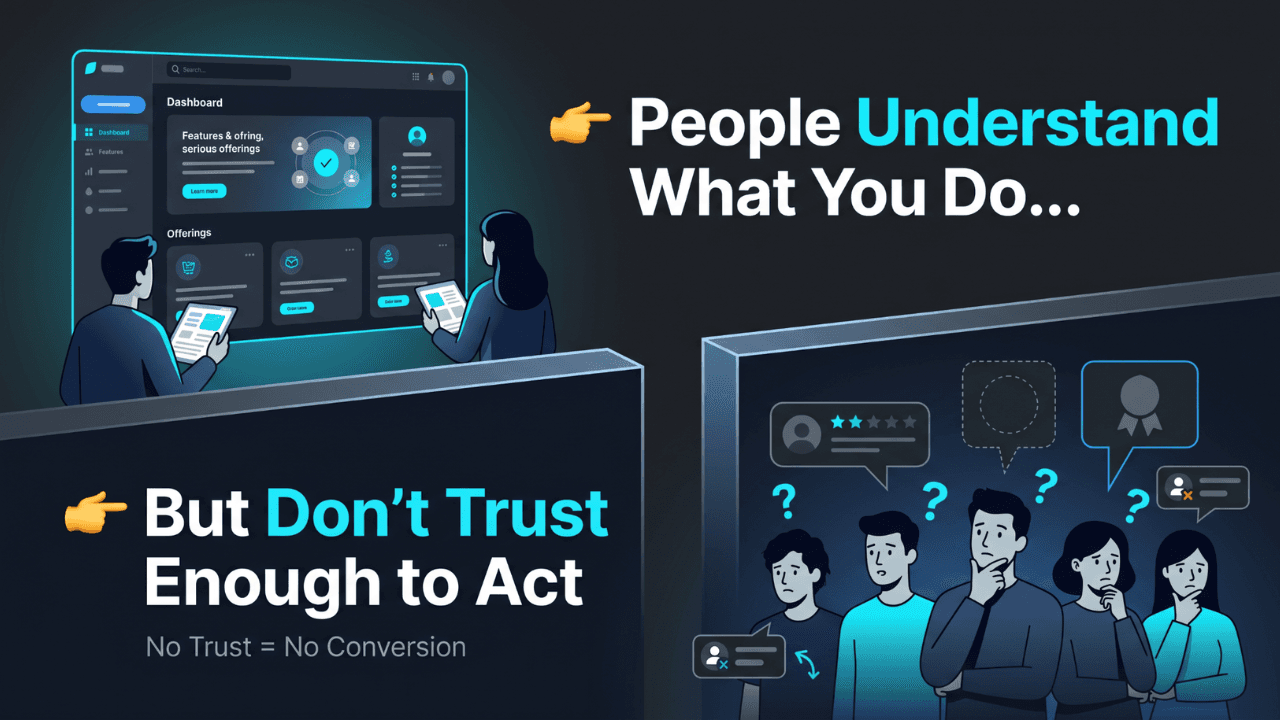
Most websites explain services, products, or expertise clearly enough. But they fail to answer the most important question in a visitor’s mind: “Why should I trust you?” That gap creates hesitation. And hesitation is where most conversions are lost
People Don’t Avoid Buying Because Information Is Missing
A visitor may understand what you offer within seconds. But understanding is not the same as trusting. People rarely leave websites because information is missing. They leave because certainty is missing
Trust Is the Real Conversion Layer
Many businesses focus heavily on design, traffic, and SEO while ignoring trust architecture. But trust is what turns attention into action. Websites that only explain services inform visitors. Websites that build trust convert visitors
Why Human Brains Look for Trust Shortcuts Online
Online decisions happen quickly. Since people cannot fully verify businesses immediately, the brain relies on shortcuts such as testimonials, authority indicators, social proof, and specificity. These reduce perceived risk and increase confidence
Why Visitors Hesitate Before Becoming Clients
Most drop-offs happen because visitors are unconvinced, not uninterested
Lack of Proof There are not enough testimonials, case studies, or measurable outcomes
Generic Messaging The website sounds similar to competitors and lacks specificity
Weak Authority Signals Visitors do not see enough expertise, credibility, or experience indicators
The Real Psychology Behind Website Conversion
People do not buy because information exists. They buy because uncertainty reduces. Conversion happens when confidence becomes stronger than hesitation
Most Websites Explain Services. High-Converting Websites Guide Trust
This is the difference most businesses miss. Explaining what you do creates awareness. Building trust creates decisions. Trust-driven websites are intentionally designed to reduce doubt at every step
Trust Signal A: Show Real Results
Generic claims rarely convert. Real outcomes do. Measurable results, performance improvements, and case studies help visitors visualize success before they inquire.
Trust Signal B: Use Social Proof Correctly
Testimonials work best when they explain transformation, not compliments. Strong social proof reduces perceived risk and increases credibility
Trust Signal C: Clarify Your Positioning
People trust specialists faster than generalists. Clear positioning immediately improves credibility because visitors understand exactly who you help and how
Trust Signal D: Reduce Friction
Complex forms, unclear CTAs, or confusing journeys create doubt. Simpler paths feel safer and increase conversion
Real Impact of Stronger Trust Signals
Businesses that improve trust clarity often increase inquiry conversion rates from around 1% toward 2–3%, effectively doubling potential leads without increasing traffic
Additional Proof Layer
Many businesses also notice lower bounce rates, stronger inquiry quality, and shorter sales cycles after improving trust signals and positioning clarity
Mini Case Example
A service-based website improved conversion from 1.1% to 2.7% after adding stronger case studies, clearer positioning, and simplified inquiry flow
Pattern Interrupt
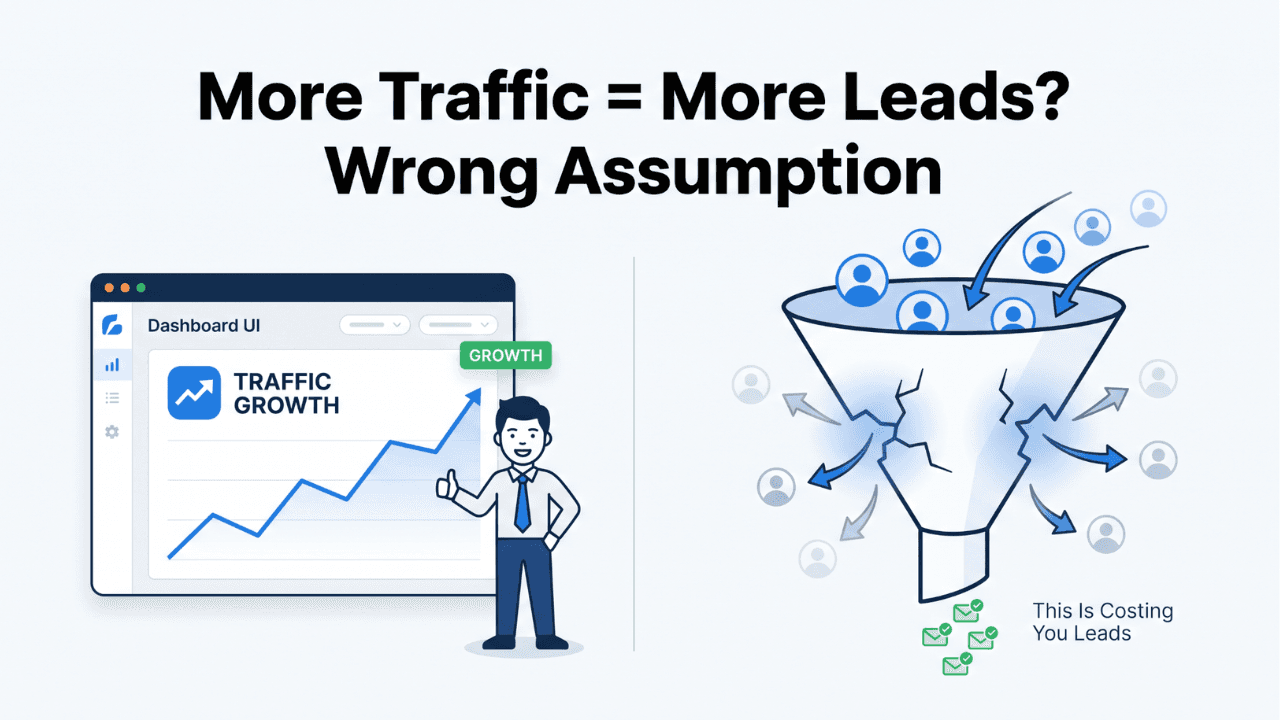
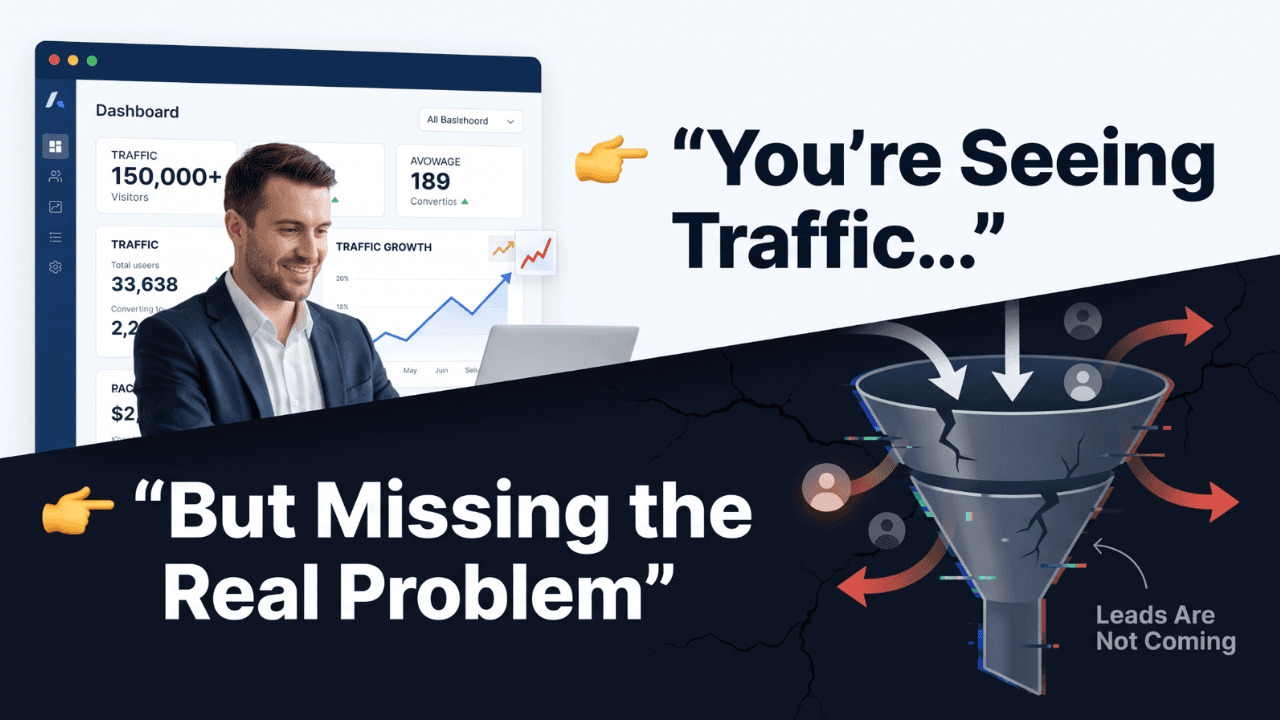
Most businesses think they need more traffic. In reality, many need more trust.
Why Traffic Cannot Fix Weak Trust
More traffic does not solve hesitation. It amplifies it. If visitors do not trust your website, increasing visibility only increases the number of people who leave
How to Identify Trust Gaps on Your Website
If visitors leave quickly, clarity may be weak. If they engage but don’t inquire, trust is likely missing. If inquiries are low quality, positioning may be unclear
Metrics That Reflect Trust
Track inquiry rate, bounce rate, form completion rate, and lead quality. These metrics often reveal whether your website builds confidence effectively
Authority Insight
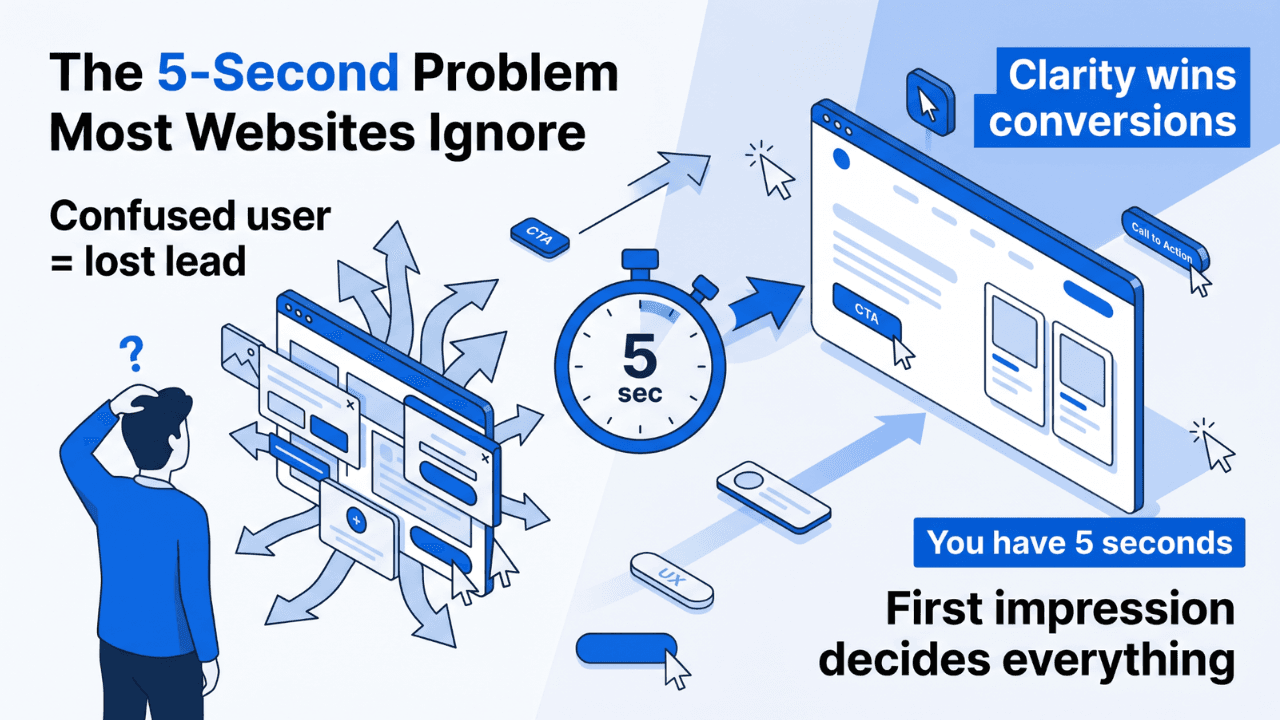
Users often form trust impressions within seconds. That is why clarity, authority, and proof have disproportionate impact on conversion outcomes
How AI Can Improve Website Trust
AI tools can identify hesitation points, analyze where visitors abandon journeys, and suggest improvements in messaging, structure, and trust placement. This creates continuous optimization instead of guesswork
Why Generic Websites Struggle to Convert
Generic websites sound safe—but safe messaging often feels forgettable. Specificity builds authority. Authority builds trust. Trust drives conversion
What Happens After Trust Improves
When trust increases, businesses often see stronger lead quality, higher inquiry rates, lower sales friction, and improved marketing ROI from the same traffic
How Continuous Optimization Builds Trust Over Time
Trust is not created once. It is reinforced repeatedly. Testing headlines, proof placement, CTA clarity, and positioning over time creates compounding gains
The Future Shift
In the coming years, websites that reduce uncertainty fastest will outperform websites that simply look modern. Trust-driven systems will outperform design-driven systems
Who This Applies To
This applies to agencies, consultants, coaches, SaaS businesses, and service providers whose websites get visitors but struggle to convert them into clients
Core Insight
People rarely leave websites because they don’t understand the service. They leave because they are not confident enough to trust the decision
Take the Next Step
If your website explains your services but fails to build trust, the opportunity is not only in redesign—it is in stronger trust architecture. Explore /web-development, /conversion-case-studies, /website-conversion-audit and /b2b-website-lead-generation
Final Insight
The strongest websites do not just explain what they do. They make visitors feel confident enough to act
Let’s bring your ideas to life. Contact us today for a free consultation or book a demo with our team.