.png&w=3840&q=75)
Disorganized Course & Program Management in UAE Institutes
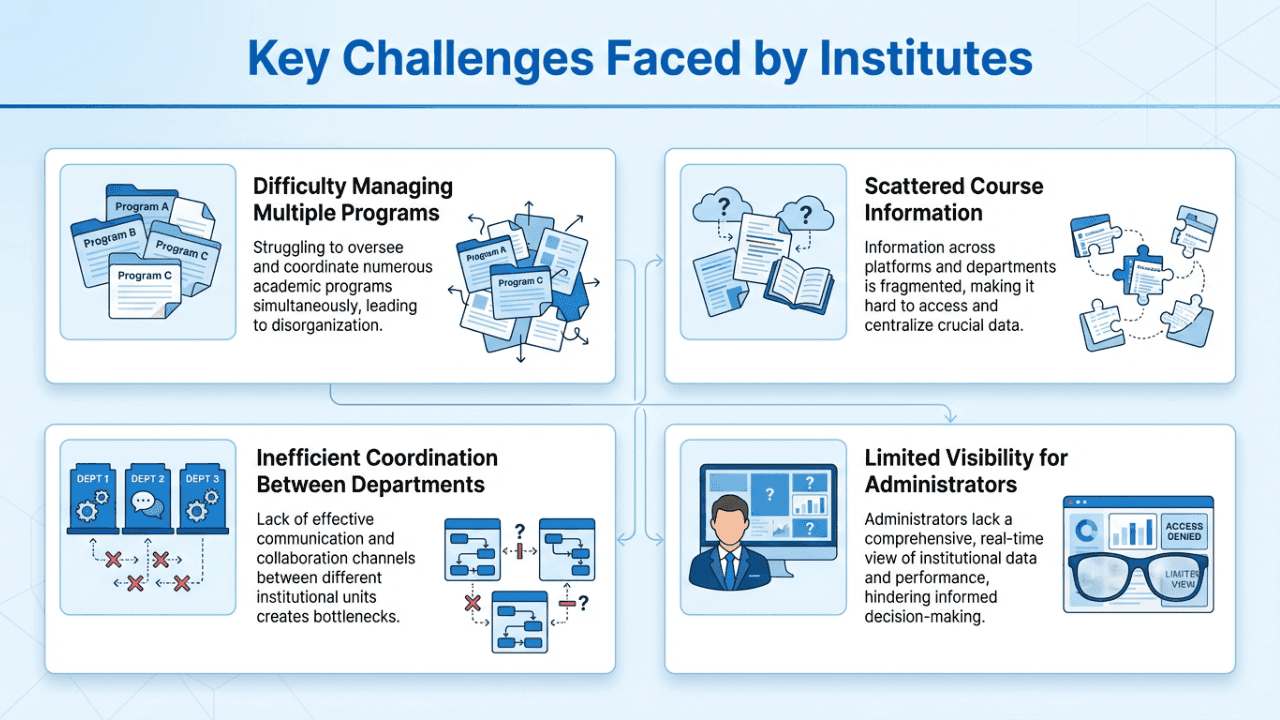
Managing multiple courses, batches, semesters, and academic programs becomes increasingly complex as institutes grow. Without a centralized system, departments often rely on Excel sheets, WhatsApp groups, and manual coordination, leading to scattered data and confusion. Faculty members spend significant time managing information instead of focusing on teaching, while administrators struggle to maintain consistency across programs. This lack of structure creates inefficiencies that directly impact productivity and decision-making.
Why Manual Systems Are Failing Institutes
Traditional methods of course management are no longer sustainable in modern academic environments. Manual systems create delays in reporting, increase the chances of errors, and make it difficult to track student progress in real time. As institutes expand their offerings, these inefficiencies multiply, making it harder to maintain control over operations. Without a unified system, decision-makers lack visibility, resulting in slower responses and missed opportunities for improvement.
Scattered Data Across Platforms Course data, attendance records, assessments, and reports are stored in multiple systems, making coordination time-consuming and error-prone
Lack of Real-Time Visibility Management cannot access instant insights into student performance or course progress, leading to delayed decisions and inefficiencies
.png&w=3840&q=75)
How LMS Solves Course Management Challenges
A modern learning management system for UAE institutes brings all academic operations into a single, centralized platform. Instead of managing multiple tools, institutes can streamline course planning, student tracking, assessments, and reporting in one place. This structured approach eliminates confusion, reduces manual dependency, and ensures that all stakeholders have access to accurate and up-to-date information
Centralized Academic Operations
With LMS implementation, institutes can manage their entire academic ecosystem from a unified dashboard. Faculty members can easily track student progress, administrators can monitor performance metrics, and management can access real-time insights for better decision-making. This centralized approach improves coordination across departments and ensures consistency in processes
Real-Time Tracking Institutes can monitor attendance, performance, and course progress instantly, enabling proactive decision-making
Reduced Manual Work Automation of repetitive tasks reduces administrative workload, allowing teams to focus on more strategic activities

Real-World LMS Adoption in Institutes
The adoption of LMS platforms is rapidly increasing across UAE institutes as organizations recognize the limitations of manual systems. Institutions are transitioning to digital solutions to improve operational efficiency, enhance academic coordination, and reduce administrative overhead. This shift is driven by the need for scalability, accuracy, and better data management
Proven Impact of LMS Implementation
Institutes that have adopted LMS platforms report significant improvements in efficiency and performance. Studies and industry observations indicate that LMS implementation can reduce manual administrative work by 40–60% while improving data accuracy and reporting speed. Similar transformations have been observed in institutions like AIIMS Bilaspur, where structured LMS systems have streamlined workflows and improved overall academic operations
Improved Academic Coordination Departments collaborate more effectively when all data is centralized and accessible in real time
Better Visibility Management gains complete visibility into operations, enabling faster and more informed decisions
.png&w=3840&q=75)
Key Features of LMS for Course Management
Modern LMS platforms provide a comprehensive set of tools designed to simplify and optimize course management processes. These features are built to handle complex academic structures while ensuring efficiency and accuracy
Core Functionalities
From automated attendance tracking to advanced reporting and analytics, LMS platforms cover all essential aspects of academic management. These systems ensure that institutes can operate efficiently without relying on manual processes
Automated Attendance & Tracking Digital tracking systems eliminate manual errors and ensure accurate and consistent record-keeping
Real-Time Reporting Institutes can generate detailed reports instantly, supporting audits, performance evaluation, and strategic planning
.png&w=3840&q=75)
Before vs After LMS Implementation
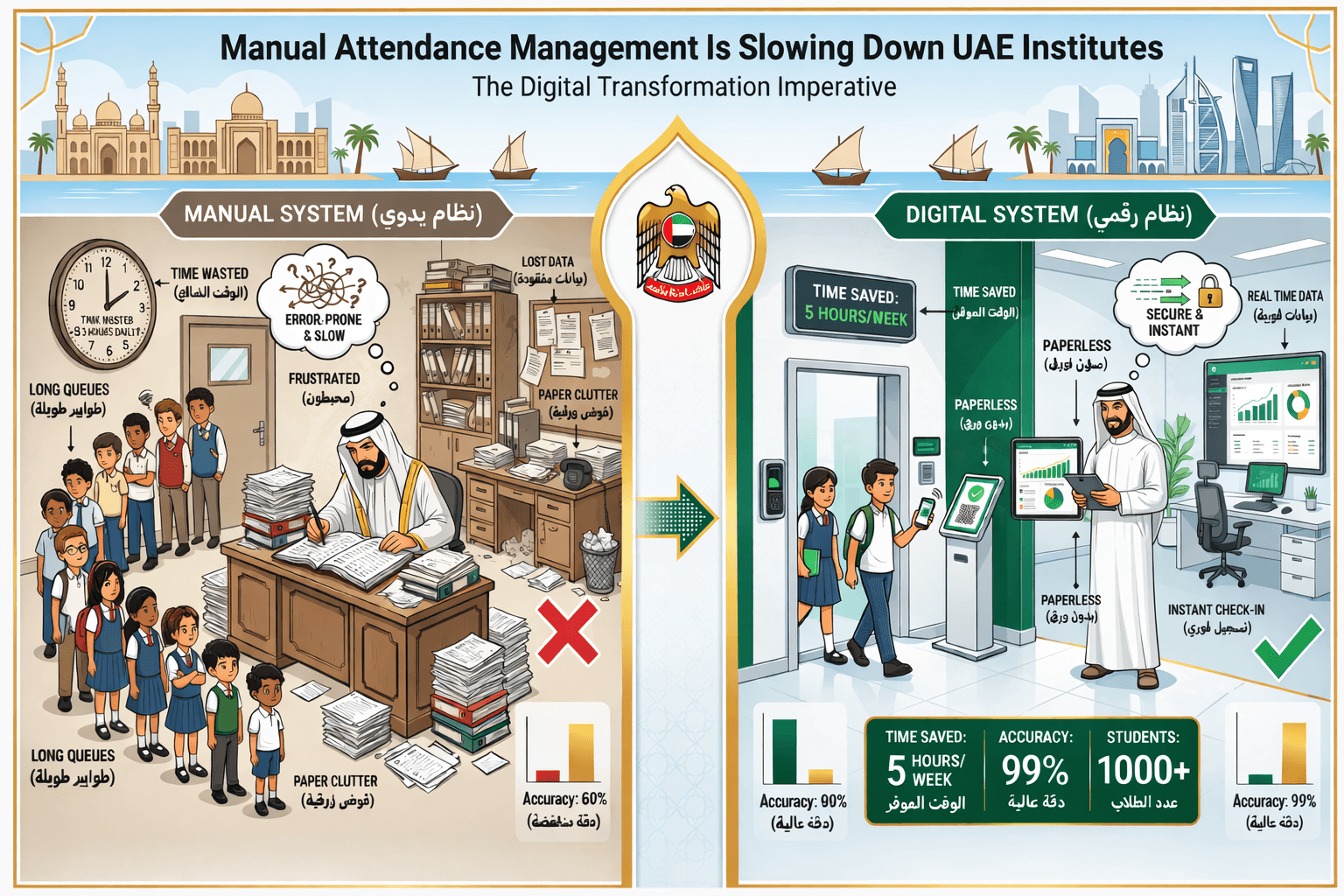
The transition from manual systems to LMS creates a clear and measurable improvement in operational efficiency. Institutes experience significant changes in how they manage courses and programs
Operational Transformation
By adopting LMS, institutes move from fragmented workflows to structured and streamlined systems that support growth and scalability
Before LMS Manual processes, delayed reporting, and limited visibility across departments create inefficiencies
After LMS Centralized systems enable faster decision-making, improved coordination, and better academic outcomes
Let’s bring your ideas to life. Contact us today for a free consultation or book a demo with our team.

How to Choose the Right LMS
Selecting the right LMS is essential to ensure successful implementation and long-term benefits. Institutes must evaluate systems based on their specific requirements and operational goals
Key Evaluation Factors
Institutes should consider usability, scalability, customization, and compliance readiness when choosing an LMS. A well-selected system ensures smooth adoption and maximum impact
Ease of Use A user-friendly system ensures quick adoption by faculty and staff, reducing training time
Scalability The system should support future growth and expansion without requiring major changes
Common Mistakes Institutes Make
Many institutes fail to achieve the desired outcomes from LMS implementation due to poor planning and execution. Understanding these mistakes is critical for success
Avoid These Pitfalls
Institutes should focus on aligning technology with their processes rather than simply adopting new tools without a clear strategy
Choosing Complex Systems Overly complicated platforms reduce usability and hinder adoption among faculty
Ignoring Workflow Alignment Systems must align with actual operational processes to deliver real value

Impact on Student Learning Experience
Efficient course management systems directly influence how students experience learning. Structured systems create a more organized and engaging learning environment
Enhanced Learning Environment
Students benefit from clear communication, transparent progress tracking, and better access to resources, leading to improved engagement and outcomes
Better Engagement Structured platforms encourage active participation and interaction in the learning process
Clear Communication Improved coordination between faculty and students ensures a smoother academic experience
.png&w=3840&q=75)
.png&w=3840&q=75)
.png&w=3840&q=75)
.png&w=3840&q=75)
.png&w=3840&q=75)